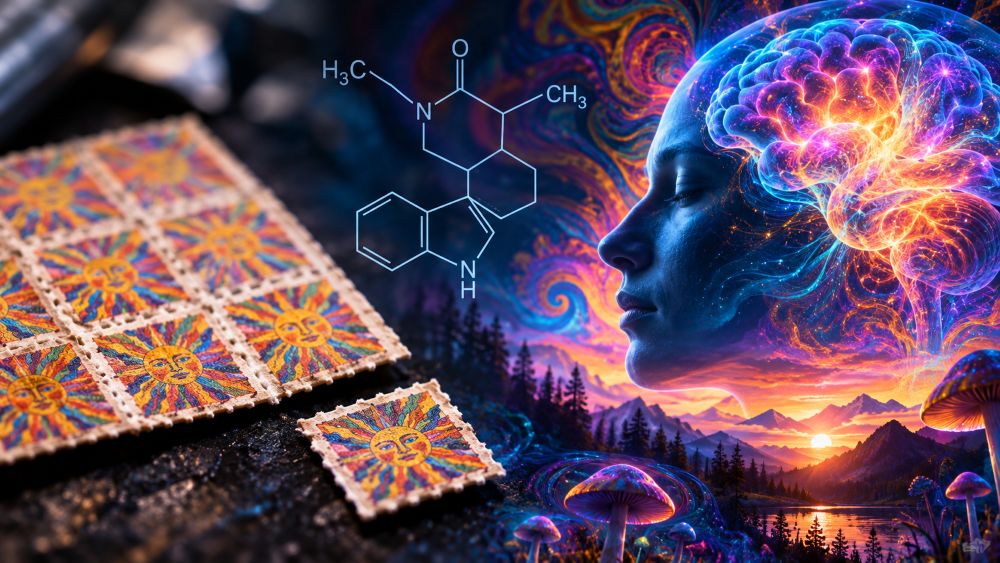
Few substances have attracted as much scientific curiosity, cultural attention, and public controversy as LSD. From its unexpected discovery in a Swiss laboratory to its association with the counterculture movement of the 1960s, lysergic acid diethylamide has remained one of the most recognizable psychedelic compounds in history.
Today, interest in lsd25 extends far beyond its historical reputation. Researchers are investigating how psychedelic substances affect consciousness, perception, and mental health. Meanwhile, people searching online for information about LSD often encounter conflicting claims, questionable products, and misleading descriptions.
Understanding the difference between scientific evidence and online speculation is essential.
What Is LSD25?
LSD-25, commonly known as LSD or acid, is a powerful synthetic psychedelic substance. Its full chemical name is lysergic acid diethylamide, and it belongs to a group of compounds known as classical psychedelics.
The number 25 has an interesting origin. It refers to the compound's position in a series of lysergic acid derivatives investigated by Swiss chemist Albert Hofmann in 1938.
Its remarkable psychological effects were discovered several years later, in 1943.
Unlike stimulants or sedatives, lsd25 primarily changes how the brain processes sensory information, emotions, and perceptions. People may experience unusual visual patterns, altered awareness of time, and profound changes in their interpretation of ordinary surroundings.
However, these experiences are highly unpredictable. Two people exposed to the same substance may describe dramatically different psychological effects.
How Does LSD Affect the Human Brain?
The human brain relies on a complicated network of chemical messengers called neurotransmitters. These substances help regulate everything from mood and memory to sleep and sensory processing.
LSD interacts with the serotonin system, particularly receptors associated with perception and cognition.
This interaction can temporarily change communication between different brain networks.
Some individuals report intensified colors, unusual geometric patterns, or an altered sense of personal identity. Others describe confusion, emotional instability, or overwhelming anxiety.
The effects are not necessarily pleasant.
A person's existing mental state, surroundings, psychological vulnerabilities, and exposure to other substances can influence the experience.
Researchers continue investigating these mechanisms to understand both the potential scientific applications and the risks associated with psychedelics.
LSD for Sale: Why Online Information Requires Caution
Search engines frequently display queries such as lsd for sale, reflecting public interest in the substance and its availability.
However, online advertisements and product descriptions should never be confused with independent scientific verification.
Unregulated drug markets create substantial uncertainty about chemical identity, concentration, contamination, and authenticity.
A substance advertised under a familiar name may contain an entirely different compound. Appearance, packaging, and seller descriptions cannot establish chemical composition.
This matters because some substances misrepresented as LSD have significantly different toxicological profiles.
For anyone researching psychedelics, understanding these uncertainties is far more important than trusting commercial claims.
How Long Do the Effects of LSD Last?
One distinguishing characteristic of LSD is its relatively long duration of action.
Effects commonly begin within approximately 30 to 90 minutes, although individual responses vary.
The experience can continue for 8 to 12 hours, sometimes longer.
During this period, people may experience significant changes in concentration, emotional responses, and judgment.
Ordinary activities can become difficult. Driving, operating machinery, or navigating unfamiliar environments may present serious dangers because spatial awareness and decision-making can be impaired.
Some individuals also experience lingering fatigue, sleep disturbances, or psychological discomfort after the primary effects have diminished.
Importantly, the duration and intensity cannot be predicted reliably from appearance or informal product descriptions.
Where to Buy LSD: Understanding the Legal Questions
The phrase where to buy lsd appears in online searches, but the legal implications of LSD are frequently misunderstood.
LSD is a controlled substance in many countries, including the United States and much of Europe.
In the United States, it is classified as a Schedule I substance under federal law. This classification imposes strict restrictions on manufacturing, distribution, possession, and research activities.
Scientific investigations involving controlled psychedelics generally require specific regulatory authorizations.
Laws differ between jurisdictions, and changes in public attitudes toward psychedelic research do not automatically make recreational possession or commercial distribution legal.
People interested in the scientific study of LSD should distinguish between regulated clinical research and unauthorized commercial activity.
The Potential Psychological Risks of LSD25
Discussions about psychedelics often emphasize unusual sensory experiences. Yet the psychological risks deserve equal attention.
LSD can produce intense anxiety, panic, paranoia, and distorted interpretations of reality.
In some situations, an individual may feel unable to control their thoughts or distinguish between imagined threats and actual circumstances.
These reactions are sometimes described as a bad trip.
For people with certain psychiatric vulnerabilities, psychedelic exposure may contribute to serious psychological complications.
Another recognized concern is hallucinogen persisting perception disorder, or HPPD, in which visual disturbances continue or recur after the immediate effects have ended.
Although LSD is not generally associated with the same pattern of physical dependence as opioids, this does not mean it is harmless.
Its psychological effects can be significant, and individual vulnerability varies considerably.
Why Scientists Continue Studying Psychedelics
Despite the risks, psychedelic compounds have attracted renewed scientific interest.
Researchers are exploring whether carefully controlled psychedelic-assisted interventions could eventually contribute to treatments for certain mental health conditions.
This research is conducted in specialized environments involving medical screening, professional supervision, and structured psychological support.
Such investigations should not be confused with unsupervised recreational use.
Early findings in psychedelic research have generated scientific interest, but the evidence varies considerably between substances and conditions. Results involving psilocybin, for example, cannot automatically be applied to LSD.
Questions about long-term effectiveness, patient selection, safety, and appropriate clinical protocols remain important.
The distinction is simple: a substance being investigated for possible medical applications is not the same as a treatment proven safe and effective for general use.
What Makes Reliable Substance Information Important?
The internet contains an enormous amount of material about psychedelics. Unfortunately, the quality of that information varies widely.
Some websites focus on sensational experiences. Others present speculative claims as established scientific facts.
Reliable educational content should explain what a substance is, how it affects the body, what remains uncertain, and which risks deserve attention.
This is particularly important for compounds such as lsd25, where relatively small quantities can produce powerful psychological effects.
Educational resources such as Substance Facts can serve as a starting point for understanding substance terminology and the questions readers should investigate further. Any medical or legal claims should still be checked against authoritative guidance.
Clear explanations help readers separate established knowledge from exaggerated promises.
Frequently Asked Questions About LSD
Is LSD25 different from LSD?
No. LSD25 and LSD-25 are alternative names for lysergic acid diethylamide. The number 25 comes from the compound's original laboratory identification.
Can LSD cause permanent psychological problems?
Some individuals experience persistent psychological or perceptual disturbances following LSD exposure. Although these outcomes are not universal, they are important recognized risks.
Is LSD physically addictive?
LSD is not typically associated with compulsive physical dependence in the same way as substances such as heroin. However, tolerance can develop, and harmful patterns of use are possible.
Is LSD legal for medical research?
Authorized research may be permitted under strict regulatory conditions. Requirements depend on the country, institution, and nature of the investigation.
Can someone identify LSD by its appearance?
No. Visual appearance cannot reliably establish a substance's chemical identity, purity, or concentration.
Final Thoughts: Knowledge Matters More Than Myths
LSD has occupied an unusual position in modern history. It has inspired artistic movements, raised difficult scientific questions, and generated decades of debate about consciousness and human perception.
Yet its cultural reputation should never overshadow the realities of its pharmacological effects.
Understanding lsd25 requires more than reading personal experiences or commercial descriptions. It means examining the science, acknowledging uncertainty, and recognizing that powerful changes in perception can carry serious consequences.
As psychedelic research continues, accurate and balanced education will remain essential.
Curiosity may begin with a simple search. Responsible understanding requires looking beyond the headline.