Choosing a link building provider shouldn't feel like solving a financial puzzle. Yet businesses frequently encounter confusing offers, unpredictable monthly fees, and packages that promise impressive backlink numbers without explaining what those links actually represent.
One agency charges $2,000 per month. A freelancer offers individual placements for $80. An online marketplace advertises publishing opportunities starting at just $12.
Why such a difference?
The answer lies in how these services operate, what they include, and how much control customers have over their investments.
Understanding link building pricing helps businesses compare offers more effectively and choose the purchasing model that matches their budget, experience, and marketing objectives.
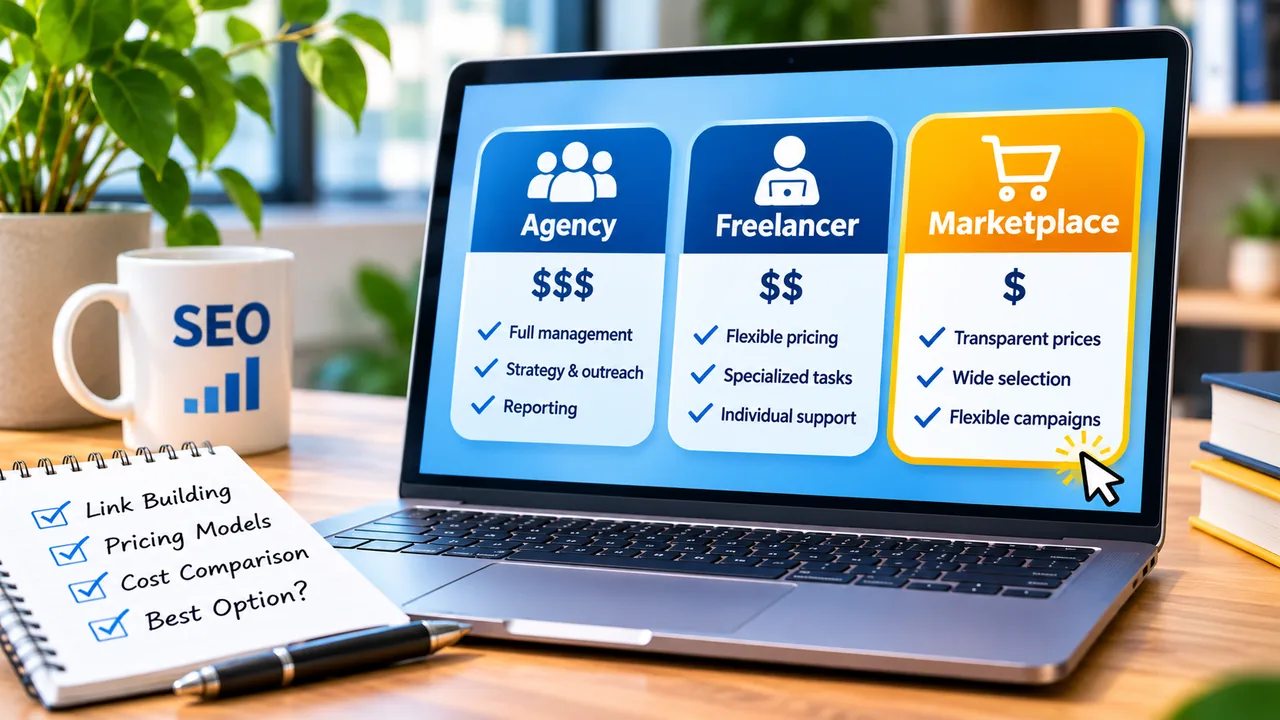
Three Ways Businesses Pay for Link Building
Not every link building service follows the same business model. Some companies pay for ongoing agency management, others hire freelancers for specific tasks, and many prefer purchasing publications directly through online platforms.
Each approach comes with different responsibilities and expenses.
1. SEO Agencies: Paying for a Managed Service
Traditional SEO agencies typically offer link building as part of a broader search engine optimization strategy.
Their services may include competitor analysis, content planning, publisher outreach, article writing, and ongoing performance reporting.
For example, an agency might charge $1,500 monthly for a campaign involving several editorial placements and strategic consultation.
The advantage is convenience. Businesses receive professional assistance without managing individual publishing relationships.
However, agency fees can include account management, internal operating expenses, and other costs beyond the publications themselves.
This means the total link building cost may be considerably higher than the direct publishing expenses.
Agency services can make sense for businesses that require comprehensive SEO management, particularly when their teams lack the time or expertise to coordinate campaigns internally.
2. Freelancers: Flexible Services with Variable Costs
Freelance SEO specialists represent another option.
Some freelancers specialize in outreach, while others provide content writing, publisher relationships, or complete link building services.
Freelance link building pricing is often more flexible than a traditional agency contract.
A freelancer might charge per completed placement, per hour, or according to an agreed project budget.
However, pricing flexibility also creates additional considerations.
Who checks the publishing website's quality? Who writes the content? What happens when an article is rejected? Is reporting included?
These details should be clarified before making a payment.
Freelancers can be a practical solution for businesses that need specific expertise without committing to a long-term agency agreement.
3. Link Building Marketplaces: Direct Access to Publications
Online marketplaces use a different approach.
Instead of charging primarily for agency management, they allow customers to explore publishing opportunities and compare available prices.
Bzoomer, for example, offers access to more than 50,000 websites where businesses can evaluate publishing options using SEO metrics and pricing information.
Customers can choose individual publications or select predefined SEO packages and managed campaigns.
This model provides greater transparency because businesses can compare available opportunities before purchasing.
It also makes it easier to start with a smaller budget and expand gradually.
For companies comfortable managing their own SEO strategy, a marketplace can offer a practical alternative to traditional agency contracts.
Link Building Pricing Comparison: What Do You Actually Get?
Let's consider three hypothetical purchasing scenarios.
Scenario A: The Traditional Agency
A company pays $1,200 monthly for a managed campaign.
The fee includes strategic planning, outreach, content production, reporting, and several publications.
The company benefits from professional management but may have limited visibility into the individual publishing costs.
Scenario B: The Freelance Specialist
Another company hires a freelancer to arrange five editorial placements at $120 each.
The total is $600, assuming writing and all other expenses are included.
The business receives specific deliverables but may still need to manage its overall SEO strategy.
Scenario C: The Online Marketplace
A third company uses Bzoomer to browse publication opportunities directly.
Individual publications start at $12, automated packages start at $34, and All-in-1 campaigns start at $49.
The business can select a purchasing format according to its needs rather than committing to a fixed monthly agency fee.
These examples demonstrate how the same objective can involve completely different pricing structures.
The lowest initial link building price doesn't necessarily represent the best value. The services included, publishing quality, and amount of work required from the customer all matter.
Fixed Pricing vs. Monthly Retainers
One of the biggest differences between link building providers is how customers are billed.
Fixed-Price Publications
With fixed-price services, the customer pays for an agreed publication or campaign.
This approach offers several advantages:
• Clear upfront spending
• Easier comparison between offers
• No mandatory recurring commitment
• Greater control over individual purchases
• Flexibility to purchase when needed
For example, businesses using Bzoomer can order individual publications or campaigns without subscribing to an ongoing monthly service.
This can be particularly useful for companies with seasonal marketing budgets or occasional publishing requirements.
Monthly Retainer Agreements
Agencies frequently operate through monthly agreements.
The business pays a recurring fee for an agreed range of services, which may include research, content creation, and outreach.
This model can be useful when ongoing professional management is required.
However, customers should understand what deliverables they receive each month and whether unused budgets carry forward.
A recurring agreement doesn't automatically guarantee better results.
The most suitable link building pricing model depends on how much management and flexibility your business needs.
Why Transparent Backlink Pricing Matters
Imagine ordering ten backlinks without knowing which websites will publish your articles.
You receive a list of URLs after publication, but several websites are unrelated to your business.
Unfortunately, you've already paid.
Transparent pricing and publication information can reduce this type of uncertainty.
Before purchasing a backlink, businesses should ideally understand the publishing website's characteristics, available metrics, and content requirements.
Useful evaluation criteria include:
• Domain Rating (DR) and Domain Authority (DA)
• Number and quality of referring domains
• Organic visibility and publishing activity
• Topical relevance to your business
• Website language and geographic audience
• Editorial quality and publication conditions
Bzoomer's marketplace allows customers to compare domain metrics and available publication prices.
This makes it easier to assess whether a particular backlink price fits the intended campaign.
However, SEO metrics are indicators rather than guarantees. A high DR score doesn't necessarily mean that a website has a relevant audience or that a placement will produce measurable results.
The Difference Between Buying One Link and Buying a Campaign
Businesses sometimes compare the price of an individual backlink with the price of a complete campaign.
But these are different products.
An individual publication generally involves one article or placement on a selected website.
A campaign may coordinate multiple articles, supporting content, and links according to a predefined structure.
For example, Bzoomer offers All-in-1 campaigns that combine a main article with supporting SEO publications.
This provides an alternative to selecting every individual publishing opportunity manually.
A structured campaign can simplify the ordering process, especially for businesses that prefer a managed service.
However, a campaign containing many publications shouldn't automatically be considered more valuable than a smaller collection of carefully selected editorial placements.
The relevance, editorial quality, intended audience, and purpose of the publications remain important.
When evaluating the cost of backlinks, businesses should distinguish between the number of links delivered and the overall quality of the publishing opportunities.
Are Volume Discounts Worth Considering?
Some publishing platforms offer quantity discounts when customers order multiple publications.
This can reduce the average publication expense, particularly for agencies managing several clients or businesses planning larger campaigns.
For example, consider a hypothetical publisher charging $50 per article.
Ten publications would normally cost $500.
With a 10% quantity discount, the total would decrease to $450.
The saving is useful, but it shouldn't determine the entire purchasing strategy.
If only five publications are relevant to your business, purchasing ten solely to receive a discount may create unnecessary expenses.
Effective link building pricing decisions balance quantity, quality, and actual business requirements.
How to Avoid Overpaying for Link Building Services
Before choosing a provider, compare the complete service rather than simply looking at the advertised price.
Ask whether content creation is included, whether publishing websites can be reviewed, and whether additional fees apply.
It's also worth checking the rules surrounding link attributes.
Paid links intended to influence search rankings can violate Google's spam policies. Sponsored or advertising links should be appropriately qualified, typically using rel="sponsored" or rel="nofollow".
Businesses should evaluate paid publications for their audience relevance, content distribution value, and potential referral traffic rather than assuming that purchasing links guarantees ranking improvements.
A useful publishing opportunity should make sense within your broader marketing strategy.
If you're considering a service costing several thousand dollars annually, request a clear description of the work involved and how performance will be evaluated.
Frequently Asked Questions About Link Building Pricing
What is the cheapest way to start link building?
Businesses can explore individual publication opportunities through marketplaces such as Bzoomer, where prices start at $12 per publication. The suitability of any placement depends on its relevance and quality.
Is an SEO agency more expensive than a marketplace?
Agency services often include strategy, outreach, management, and reporting, which can increase the overall fee. Marketplaces provide more direct access to publishing options, although the amount of work included depends on the selected service.
How much does link building cost for a one-time campaign?
The cost for link building depends on the publication requirements and campaign size. Bzoomer offers automated packages from $34 and All-in-1 campaigns from $49, while individually selected publications have their own prices.
Can I manage link building without a monthly subscription?
Yes. Platforms offering one-time publication purchases allow businesses to order content placements or campaigns without a mandatory recurring subscription.
How do I compare link building prices fairly?
Compare the websites, content requirements, included services, publishing conditions, and total expenses. A lower price can be attractive, but relevance and editorial standards should remain priorities.
Final Thoughts: Choose a Pricing Model That Fits Your Business
Understanding link building pricing is ultimately about knowing what you're buying.
Agencies provide professional management, freelancers offer specialized assistance, and marketplaces give businesses more direct access to publishing opportunities.
Each option can be appropriate depending on the company's resources and expectations.
Bzoomer combines marketplace flexibility with automated packages and managed All-in-1 campaigns, allowing customers to choose how much control they want over their publications.
Before investing, define your objectives, compare the available options, and review what each service includes.
The right pricing model isn't simply the cheapest one.
It's the one that delivers relevant publishing opportunities, manageable expenses, and a clear understanding of how your marketing budget is being spent.